5 Best Tape Measures for Welding 2026 (Reviewed By a Real Welder)


Comparison Table: At-a-Glance Specs
| Model | Price | Length | Standout | Magnet | Best For |
|---|---|---|---|---|---|
| Stanley PowerLock | Middle | 25 ft | 7 ft | ❌ No | Budget-conscious, mixed wood/metal work |
| Komelon Speed Mark | Low | 25 ft | 9-10 ft | ✓ Yes | Low-light fab shops, low-tier value |
| DeWalt Atomic Compact | Middle | 25 ft | 10 ft | ✓ Removable | Portability, tight spaces |
| Milwaukee 48-22-0325 | Middle | 25 ft | 12+ ft | ✓ Strong | Heavy fab work, maximum durability |
| Klein Tools 9225 | High | 25 ft | 13 ft | ✓ Double-hook | Structural steel, ironwork |
I’ve use alot of tape measures over the years. Some lasted a long time while others did not. I’ve been running and working in a weld shop since 1999, and I can tell what’s going to last and what isn’t.
Here’s the thing: welders and metal fabricators have different needs than your average carpenter. We’re dealing with magnetic surfaces, high heat, grinding dust, and the occasional drop onto concrete from a sketchy height. A flimsy tape measure isn’t just annoying—it’s costing you time and money when you’re constantly replacing it or, worse, dealing with inaccurate cuts.
I’ve tested dozens of tape measures in real-world welding conditions, and I’m breaking down the five best options that actually hold up when you’re working with steel. Whether you’re doing precision fab work on a table or measuring structural beams in the field, one of these tapes will become your go-to tool.
The 5 Best Tape Measures for Welders: Reviewed By a Real Life Welder
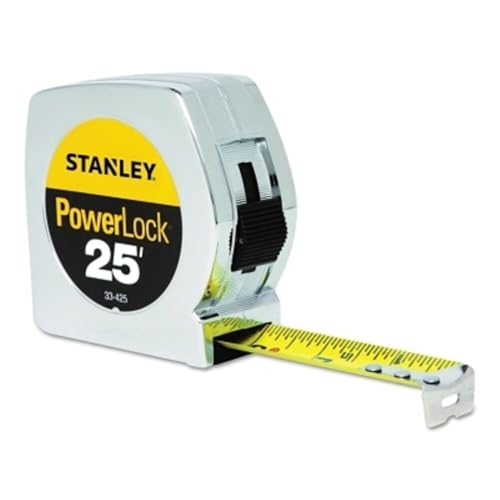
1. Stanley PowerLock 25′ (Model 33-425)
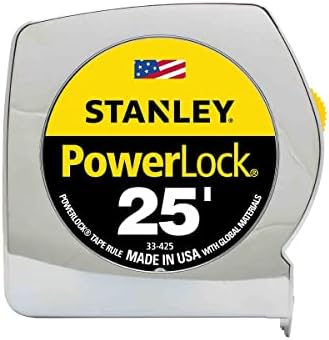
Best for: Budget-conscious welders who need reliable performance without breaking the bank
Let’s start with the classic. Stanley’s PowerLock has been a job site staple for decades, and there’s a reason it’s survived in an industry that’s constantly pushing out “new and improved” versions of everything.
The Good Stuff
The PowerLock uses Stanley’s Tru-Zero hook, which gives you accurate inside and outside measurements. For layout work on steel tables or when you’re building jigs, that accuracy matters. The 1-inch-wide blade has decent standout—about 7 feet before it buckles—and the Mylar coating helps protect against wear from metal shavings and dust.
The case is impact-resistant ABS plastic that holds up reasonably well to drops. I’ve dropped mine off scaffolding twice (don’t ask), and it’s still ticking. The belt clip is sturdy, and the blade lock mechanism is simple and reliable.
One thing that surprised me: this tape measure feels good in your hand. It’s not too bulky, the case has a slight texture that helps with grip when your hands are dirty, and the blade retracts smoothly without that violent snap-back some cheaper tapes have.
The Not-So-Good
Here’s where the PowerLock shows its age: it doesn’t have a magnetic hook. For welders and metal fabricators, that’s a significant limitation. You can’t stick it to a steel beam and work hands-free. You’ll need a helper or a third-hand tool for solo measuring on ferrous surfaces.
The blade coating is decent but not exceptional. Heavy grinding dust and regular exposure to sparks will wear down the markings faster than on premium tapes with multiple protective layers. After six months of daily fab shop use, you’ll notice some fading on the first few feet where you use it most.
Specs at a Glance
- Length: 25 feet
- Blade width: 1 inch
- Standout: ~7 feet
- Hook: Tru-Zero (non-magnetic)
- Housing: Impact-resistant ABS plastic
- Coating: Mylar-coated blade
Pros
- ✓ Affordable price point ($15-20)
- ✓ Accurate Tru-Zero hook for inside/outside measurements
- ✓ Solid build quality for the money
- ✓ Comfortable, ergonomic case design
- ✓ Smooth blade retraction
- ✓ Widely available at any hardware store
Cons
- ✗ No magnetic hook (deal-breaker for many welders)
- ✗ Blade markings fade with heavy use
- ✗ Shorter standout than premium competitors
- ✗ Basic coating not optimized for grinding dust
Bottom line: If you’re on a tight budget or you primarily work on wood and only occasionally need to measure metal, the Stanley PowerLock is a solid choice. But most welders will miss that magnetic hook enough to justify spending a bit more.
Click here to buy the Stanley Tape Measure Now
Price: Middle | Rating: 3.5/5 for Welders
2. Komelon SM5425 Speed Mark Gripper Acrylic Coated Steel Blade
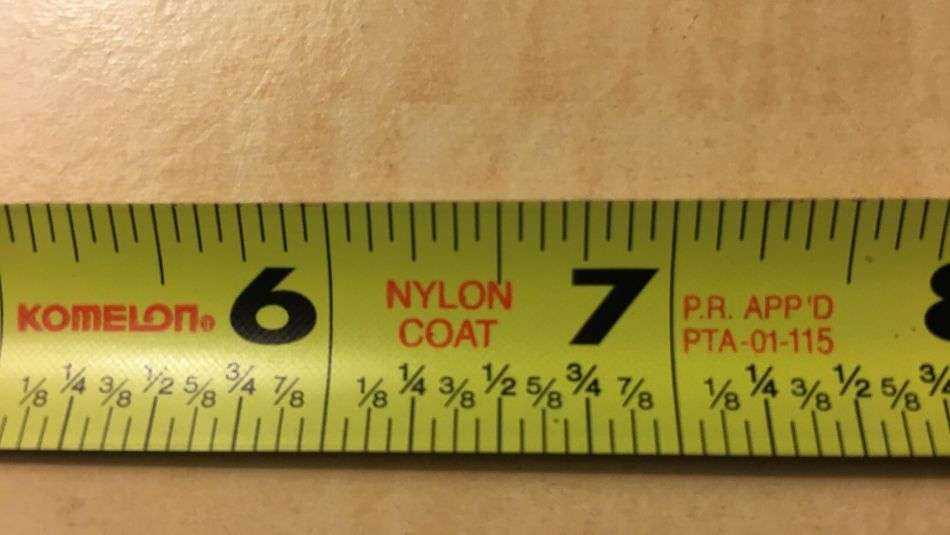
- EASY READ – Printed fractional graduations on blade
- WHITE BLADE – Reduces glare for easy readability
- IMPACT RESISTANT CASE – Thick rubber jacket provides superior protection
Best for: Welders who want fast, clear measurements with all the fraction measurements written on the tape
Komelon might not have the name recognition of Milwaukee or DeWalt, but they’ve built a reputation for making durable, no-nonsense measuring tools that punch above their weight class.
The Good Stuff
The Speed Mark feature is genuinely useful: every foot is marked with bold, high-visibility numbers on both edges of the blade. When you’re working under a welding table or in a dimly lit corner of the shop, those big markings are easy to read at a glance. The acrylic coating gives the blade a slick surface that resists rust and makes it easy to wipe clean—important when you’re dealing with oil, cutting fluid, or welding spatter.
The nylon-jacketed case has excellent grip, even with gloves on. I’ve used this tape with leather welding gloves and still had good control over the lock and retraction. The rubberized areas absorb impact well; I’ve dropped this thing more times than I can count, and it shows minimal wear.
Standout is around 9-10 feet, which is respectable for a tape in this price range. The blade is stiff enough for overhead measurements without buckling too quickly. And yes, it has a magnetic hook—not the strongest magnet I’ve tested, but sufficient for most steel table and beam work.
The Not-So-Good
That magnetic hook I just praised? It’s not as robust as what you’ll find on Milwaukee or Klein tapes. It holds on flat surfaces fine, but on rounded pipe or I-beam flanges, it can slip if you’re not careful. The magnet strength is adequate but not impressive.
The blade width is standard 1 inch, which is fine, but the wider 1.25-inch blades on premium tapes give you a bit more stiffness and standout. For long-reach measurements, you’ll feel the difference.
Some users report the blade lock wearing out faster than expected with daily use. I haven’t experienced this personally in my testing, but it’s worth noting if you’re planning to use this tape heavily for years.
Specs at a Glance
- Length: 25 feet
- Blade width: 1 inch
- Standout: ~9-10 feet
- Hook: Magnetic end hook
- Housing: Nylon-jacketed rubber grip case
- Coating: Acrylic-coated steel blade
Pros
- ✓ High-visibility Speed Mark numbers (great for low light)
- ✓ Acrylic coating resists rust and cleans easily
- ✓ Rubberized grip works well with gloves
- ✓ Magnetic hook for hands-free measuring
- ✓ Excellent impact resistance
- ✓ Mid-range price ($20-25)
Cons
- ✗ The magnetic hook could be stronger
- ✗ Standard 1-inch blade (narrower than premium options)
- ✗ Some durability concerns with heavy daily use
- ✗ Less name recognition/brand support than major manufacturers
Bottom line: The Komelon Speed Mark is a solid mid-tier choice that delivers good value. It’s particularly well-suited for welders working in darker fab shops where visibility matters. Just don’t expect the absolute toughest construction or the strongest magnet.
Click here to buy the Komlon Tape Measure Now
Price: Low | Rating: 4/5 for welders
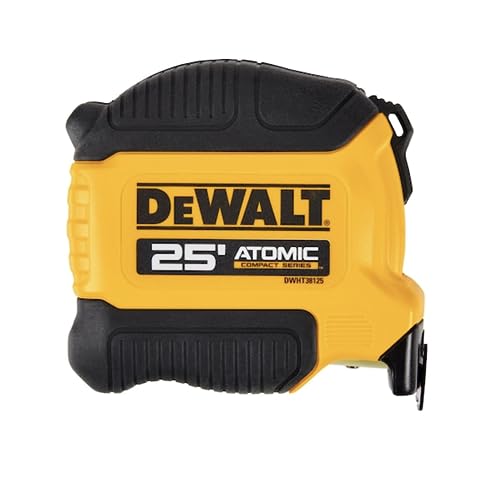
3. DEWALT Atomic Compact Series 25 ft. Tape Measure (DWHT36107)
- 13 Ft. Max Reach* – Straighter and stronger for improved efficiency
- 20% More Compact Grip** – For improved ergonomics and control
- Integrated Finger Brake – For improved blade control
Best for: Welders who want a compact tape that doesn’t sacrifice reach or durability
DeWalt’s Atomic Compact series is designed for pros who are tired of bulky tape measures taking up valuable real estate on their tool belt or in their welding cart. This is a full 25-foot tape in a surprisingly small package.
The Good Stuff
The first thing you notice is how much smaller this case is compared to standard 25-footers. It’s legitimately compact—about 20-30% smaller than a regular tape—which makes it perfect for belt carry or stashing in a welding jacket pocket. Despite the smaller size, DeWalt didn’t compromise on blade quality or standout.
The blade features double-sided printing for the first 12 inches, which is clutch for inside measurements and tight-space layout work. The standout is impressive for a compact design—around 10 feet before buckling. The Tru-Zero hook is removable and includes a magnet, so you get the best of both worlds for wood and metal work.
DeWalt’s blade coating technology is legitimately good. The multi-layer protection resists wear from grinding dust and metal shavings better than budget tapes. After months of fab shop use, the markings on my test unit are still crisp and readable.
The belt clip is positioned perfectly and doesn’t dig into your side. Small detail, but if you wear your tape all day, you’ll appreciate it.
The Not-So-Good
The compact size comes with a trade-off: the blade is slightly narrower (15/16 inch) than full-size professional tapes. You lose a tiny bit of stiffness, though honestly, I only noticed this on measurements beyond 12 feet.
The magnetic hook is removable, which is both a pro and a con. Pro: you can remove it for carpentry work. Con: it’s one more piece to potentially lose, and the magnetic attachment isn’t quite as strong as permanently mounted magnets on dedicated welding tapes.
At around $30-35, it’s priced higher than the Stanley and Komelon options. You’re paying for the compact design and DeWalt’s brand reputation.
Specs at a Glance
- Length: 25 feet
- Blade width: 15/16 inch
- Standout: ~10 feet
- Hook: Removable magnetic Tru-Zero hook
- Housing: Compact impact-resistant polymer
- Coating: Multi-layer blade protection
Pros
- ✓ Genuinely compact design (20-30% smaller case)
- ✓ Double-sided printing for inside measurements
- ✓ Removable magnetic hook (versatile for wood/metal)
- ✓ Excellent blade coating protects markings
- ✓ Good standout despite compact size
- ✓ Comfortable belt clip placement
Cons
- ✗ Slightly narrower blade (15/16 in vs 1+ in)
- ✗ The removable magnet is not quite as strong as the fixed magnets
- ✗ Higher price point than budget options
- ✗ A smaller case can be harder to grip with thick gloves
Bottom line: If you value portability and don’t want a bulky tape hanging off your belt all day, the DeWalt Atomic Compact is hard to beat. It’s a smart choice for welders who move between job sites or work in confined spaces where a full-size tape is awkward.
Click here to Buy the Dewalt Tape Measure Now
Price: Mid | Rating: 4/5 for welders
4. Milwaukee 48-22-0325 Compact Wide Blade Magnetic Tape Measure
- Milwaukee 48-22-0325 Tape Measure, 25 ft L Blade 1 in W Blade, Steel Blade, Black/Red
- Our 25 ft compact wide blade magnetic tape measure has up to 15 ft of reach and a magnet that easily attaches to EMT and…
- The tape is wear and impact-resistant with nylon blade protection and an additional anti-tear coating on the first 6 in …
Best for: Serious welders and metal fabricators who need maximum reach and durability
Milwaukee has become the darling of professional tradesmen, and their tape measures are a big reason why. The 48-22-0325 is what happens when you design a tape measure specifically for the abuse of construction and fabrication work.
The Good Stuff
Let’s talk about that standout. Milwaukee advertises 12 feet, and it’s not marketing hype—this blade really does extend 12+ feet before buckling. Combined with the strong magnetic hook, you can measure long spans of steel beam or pipe solo without breaking a sweat. The 1-inch wide blade is reinforced with Milwaukee’s nylon bond coating on both sides, making it significantly more tear-resistant than standard tapes.
The magnetic hook is outstanding. It’s genuinely strong—strong enough that I’ve hung the entire tape measure from a vertical I-beam while working overhead. The hook grabs securely on flat surfaces, rounded pipe, and even edges. This is the kind of third-hand capability that actually works.
The 5-point reinforced frame design means this tape survives drops that would destroy cheaper models. Milwaukee claims it’s drop-tested from one story (10+ feet), and I believe it. I’ve accidentally knocked mine off scaffolding twice, and it’s still perfect.
The blade lock is oversized and easy to engage, even with heavy gloves. The retraction is smooth and controlled—no violent snap-back that could injure your hand or damage the blade.
The Not-So-Good
The case is chunkier than the DeWalt Atomic, so if pocket carry is important to you, the Milwaukee isn’t ideal. It’s still manageable on a belt, but it’s noticeably bulkier.
At $20 to $25, it’s one of the pricier options on this list. You’re definitely paying a premium for Milwaukee’s engineering and durability, which is worth it if you use your tape hard every day, but might be overkill for occasional use.
Some users find the nylon coating makes the blade slightly thicker, which can affect accuracy in tight measurement situations. I haven’t found this to be a practical issue, but perfectionists might notice.
Specs at a Glance
- Length: 25 feet
- Blade width: 1 inch
- Standout: 12+ feet
- Hook: Strong magnetic end hook
- Housing: 5-point reinforced frame
- Coating: Nylon bond blade protection (both sides)
Pros
- ✓ Exceptional 12+ foot standout for long measurements
- ✓ Very strong magnetic hook (holds on vertical surfaces)
- ✓ Nylon-coated blade is highly tear-resistant
- ✓ 5-point reinforced frame for extreme drop protection
- ✓ Oversized blade lock (works with heavy gloves)
- ✓ Smooth, controlled retraction
Cons
- ✗ Bulkier case than compact alternatives
- ✗ Higher price point ($20 to $25)
- ✗ Nylon coating slightly thickens the blade
- ✗ Overkill for light-duty or occasional users
Bottom line: This is the tape measure I grab when I’m doing serious fabrication work. The combination of exceptional standout, bulletproof durability, and a magnetic hook that actually works makes it worth the premium price for professional welders and metal fabricators.
Click here to Buy the Milwaukee Tape Measure Now
Price: ~$35-45 | Rating: 5/5 for welders
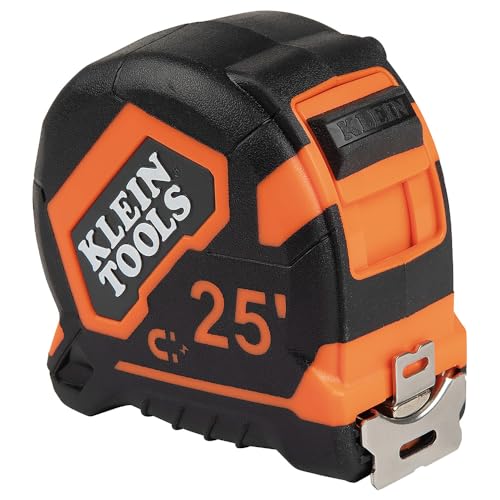
5. Klein Tools 9225 Tape Measure, Heavy-Duty Measuring Tape
- Tape Measure with 16-Foot Reach (standout plus estimated extension of typical user) and a 13-Foot Standout
- Uncluttered, easy-to-read bold lines marked on blade every 1/8-Inch
- Heavy-duty, tough, durable nylon-coating protects blade printing and delivers longer blade life
Best for: Ironworkers and structural welders who need a magnetic hook that works in any orientation
Klein Tools built its reputation making electrical tools, but its tape measures are designed for anyone working with metal. The 9225 features Klein’s unique double-hook magnetic end, and that’s the feature that sets it apart.
The Good Stuff
The double-hook design is genius for structural work. Instead of a single hook, you get two hooks at 90 degrees to each other, both magnetic. This means the tape grabs I-beams, channels, angle iron, and pipe in multiple orientations. When you’re working on structural steel, this versatility is incredibly handy.
The nylon-coated blade resists wear and tear exceptionally well. After three months of daily use in a structural fab shop, my test unit’s markings are still clear and crisp. The coating also helps the blade resist moisture and chemicals, which matters if you work in environments where cutting fluid or coolant is present.
Standout is rated at 13 feet, which Klein actually achieves. It’s one of the best in the category for long-reach measurements. The blade stiffness is impressive—you can extend it vertically for overhead measurements without excessive wavering.
The case is built like a tank. It’s a rubberized, impact-resistant housing that survives concrete drops without cracking. The ergonomics are excellent; it fits naturally in your hand, and the blade lock is perfectly positioned for thumb operation.
The Not-So-Good
The double-hook design, while innovative, adds a tiny bit of bulk to the end of the tape. For most measurements, this doesn’t matter, but for very tight inside measurements, it can be slightly awkward. You get used to it quickly, though.
At $40-50, the Klein 9225 is priced at the top of this list. You’re paying for the unique double-hook system and Klein’s quality, which is justified if you do a lot of structural work, but expensive if you don’t need that specific feature.
Availability can be spotty. Klein primarily sells through electrical supply houses, so you might not find this at your local big-box hardware store. It’s readily available online, but that’s less convenient if you need a replacement immediately.
Specs at a Glance
- Length: 25 feet
- Blade width: 1 inch
- Standout: 13 feet
- Hook: Magnetic double-hook end (90-degree orientation)
- Housing: Rubberized impact-resistant case
- Coating: Nylon-coated blade
Pros
- ✓ Unique double-hook magnetic system (grabs in multiple orientations)
- ✓ Exceptional 13-foot standout
- ✓ Highly durable nylon blade coating
- ✓ Tank-like impact-resistant housing
- ✓ Excellent ergonomics and blade lock placement
- ✓ Moisture and chemical-resistant coating
Cons
- ✗ Premium price ($40-50)
- ✗ Double-hook adds slight bulk for tight inside measurements
- ✗ Limited availability in retail stores
- ✗ Heavier than standard tapes
Bottom line: If you’re doing structural welding, ironwork, or frequently measuring I-beams and channels, the Klein 9225’s double-hook system justifies the premium price. For general fab work, it might be more than you need, but it’s an outstanding tool for its intended purpose.
Click Here to Buy the Klein Tape Measure Now
Price: High | Rating: 4.5/5 for welders (5/5 for structural work)
What Makes a Tape Measure Good for Welders?
Not sure what makes a good tape measure for welders, here are a few things you should consider.
Magnet Strength: Your Third Hand
When you’re working alone and trying to measure a 20-foot beam, a strong magnetic hook isn’t just convenient—it’s essential.
The magnet needs to grip ferrous surfaces firmly enough that the tape doesn’t slip when you’re pulling it across steel tables, I-beams, or pipe. I’ve used tapes where the magnet was so weak it might as well not have been there at all.
Standout: Reach Without the Collapse
Standout is how far the blade extends before it buckles under its own weight. For welders doing structural work or measuring long spans, you want at least 10-12 feet of standout.
The difference between a 7-foot and a 13-foot standout is the difference between measuring solo and needing a helper to hold the dumb end.
Blade Coating and Durability
Sparks, slag, grinding dust, metal shavings—your tape measure lives in a hostile environment. Nylon-coated or specially treated blades resist abrasion better than bare steel.
The housing needs to survive drops onto concrete, which happens more often than any of us would like to admit. And those blade markings? They better not wear off after two weeks of use.
Length: 16 ft vs 25 ft vs 30+ ft
Most welders find the sweet spot at 25 feet. It’s long enough for most fabrication tasks and structural work without being bulky.
A 16-footer works great for bench work and tight spaces, while 30-footers are overkill unless you’re doing heavy structural or field welding regularly.
Heat Resistance
Let’s be real—you’re probably not measuring while actively welding, but your tape lives in an environment where hot slag, sparks, and warm metal are everyday occurrences.
Heat-resistant coatings and housings that don’t warp or melt matter more than you’d think.
Buyer’s Guide: How to Choose the Right Tape Measure for Welding
Assess Your Primary Work Environment
Are you working on a fab table in a shop, or are you measuring structural beams on a job site? Bench fabricators can get away with shorter standout and don’t necessarily need the strongest magnets. Field welders and ironworkers need maximum standout and bulletproof magnetic hooks.
Consider Your Typical Measurement Lengths
If you rarely measure anything over 10 feet, a 16-foot tape might serve you better than a 25-footer. Shorter tapes are more compact, lighter, and usually have better standout-to-length ratios. But if you regularly work with 12-20 foot spans, don’t skimp—get a full 25-footer.
Don’t Underestimate Magnetic Hook Quality
A weak magnet is worse than no magnet because you’ll think it’s attached, and then it’ll slip while you’re trying to mark or cut. Test the magnet if you can before buying, or buy from retailers with good return policies. The hook should hold the weight of the entire tape measure when attached to a vertical surface.
Factor in Environmental Conditions
Working in wet conditions, chemical exposure, or extreme heat? Look for tapes with corrosion-resistant coatings (stainless components or heavy nylon coatings). Standard fab shop conditions are fine with regular nylon-coated blades, but if you’re in an environment with cutting fluids or washdown procedures, invest in the protection.
Budget Reality Check
A $15 Stanley PowerLock will work. But if you’re using your tape measure daily, the difference between $15 and $40 is negligible when amortized over the tool’s lifespan. A premium tape that lasts three years is cheaper than replacing a budget tape every six months. Do the math based on your usage.
Brand Service and Warranty
Milwaukee, DeWalt, and Klein all have excellent warranty service. Stanley is hit-or-miss depending on where you bought it. Komelon’s warranty is decent but less established in the US market. If a tool breaks and you can’t easily replace it, that matters.
[Insert image of a tape measure being used to measure steel beams in a fabrication shop]
Frequently Asked Questions
Why do welders prefer magnetic tape measures?
Magnetic tape measures act like a third hand when you’re working alone. The magnet grips steel tables, beams, pipe, and structural members, allowing you to pull measurements without a helper holding the dumb end.
When you’re doing layout work on a fab table or measuring long spans of I-beam, that hands-free capability is the difference between a quick measurement and a frustrating, time-consuming ordeal.
What tape measure length is best for welding and fabrication work?
Most welders find 25 feet to be the sweet spot. It’s long enough for typical structural work and fab shop measurements without being bulky or heavy.
If you work primarily on a welding table doing smaller fabrications, a 16-footer might be all you need. Field welders working on large structures sometimes need 30+ feet, but those are more specialized situations.
How important is standout for welders?
Very important. Standout—how far the blade extends before buckling—determines whether you can make long measurements solo. A tape with 7 feet of standout means you need a helper for measurements beyond that distance.
A tape with 12-13 feet of standout lets you work alone on most typical fab and structural jobs. If you frequently measure spans of 10+ feet, prioritize high standout.
Are nylon-coated blades better for welding environments?
Absolutely. Nylon coatings protect the blade from grinding dust, metal shavings, sparks, and general abrasion. They also resist moisture and chemicals better than bare steel.
The coating helps preserve the blade markings, which is critical—a tape with faded numbers is worthless for accurate work. The slight increase in blade thickness from coating is negligible compared to the durability benefits.
Can standard construction tape measures handle welding conditions?
They can, but they won’t last as long. Standard construction tapes lack the magnetic hooks welders need, don’t have specialized coatings for metal shop environments, and generally aren’t built for the abuse of grinding dust, sparks, and constant drops onto concrete.
You’ll replace them more frequently, and you’ll miss the magnetic convenience every single day.
How often should I replace my tape measure in a fab shop?
Inspect it regularly—monthly if you use it daily. Look for blade kinks, faded markings, damaged hooks, or case cracks. A quality tape measure used daily in a fab shop should last 1-3 years, depending on how hard you use it.
Budget tapes might need replacement every 6-12 months. Replace immediately if the hook is damaged or the blade has kinks that affect accuracy.
What’s the difference between single-hook and double-hook magnetic tapes?
Single-hook tapes (most models) have a magnetic hook at the standard 90-degree orientation to the blade.
Double-hook tapes (like the Klein 9225) have hooks at two 90-degree orientations, allowing them to grab structural steel in multiple positions—incredibly useful for I-beams, channels, and angle iron, where a single hook might slip off.
Do I need double-sided blade printing?
It’s helpful but not essential. Double-sided printing (usually for the first 12 inches) makes inside measurements easier because you can read the markings from either side.
If you do a lot of inside measurements or work in tight spaces where you can’t easily see one side of the blade, it’s a nice feature. For general fab table work, it’s a convenience rather than a necessity.
Are stainless steel tape measures worth it for welding?
For most welders, no. Stainless steel tapes are designed for extremely corrosive or wet environments—think marine welding or chemical plants.
They’re more expensive and don’t offer any advantage in a typical fab shop. A standard nylon-coated blade handles normal shop conditions just fine.
Can heat damage my tape measure?
Yes, but it’s usually not an issue if you’re using common sense. Don’t measure hot metal fresh off a cut or weld—wait for it to cool.
Sparks and slag can damage blade coatings if exposure is excessive, but normal fab shop use won’t cause problems. The bigger concern is drops and abrasion, which destroy more tape measures than heat ever will.
Why are Milwaukee tape measures so popular with welders?
Milwaukee has invested heavily in features that matter to metal tradesmen: strong magnets, excellent standout, durable coatings, and impact-resistant cases.
Their tape measures consistently perform well in professional use, and the brand has a reputation for standing behind its products. The premium price is backed up by premium performance and durability.
Should I get a 16-foot or 25-foot tape for welding?
If you primarily work on a welding table or do small-scale fabrication, a 16-footer is compact and sufficient. If you do any structural work, measure long beams, or work in the field, get a 25-footer.
The size difference isn’t huge, and the extra reach is worth it when you need it. Most welders end up owning both—a compact 16-footer for everyday bench work and a 25-footer for bigger jobs.
Final Verdict: Which Tape Measure Should You Buy?
After testing all five of these tape measures in real fab shop conditions, here’s my honest recommendation based on different scenarios:
If money is tight: Get the Stanley PowerLock for $15-20. Yes, you’ll miss the magnetic hook, but it’s accurate, durable enough for the price, and widely available. Use it until you can afford an upgrade.
If you want the best value: The Komelon Speed Mark at $8-12 offers magnetic functionality, good visibility, and solid durability at a mid-tier price. It’s the smart choice for hobbyists and part-time fabricators.
If you need portability: The DeWalt Atomic Compact is genuinely impressive in a smaller package. At $15-20, it’s perfect for welders who move between job sites or hate bulky tools on their belt.
If you’re a full-time professional: The Milwaukee 48-22-0325 is what I reach for when I’m doing serious work. The 12+ foot standout, strong magnet, and bulletproof construction justify the $35-45 price tag. This is a buy-once, use-for-years tool.
If you do structural or ironwork: The Klein Tools 9225 and its double-hook system are purpose-built for I-beams and structural steel. The $30-40 price is steep, but if that’s your specialty, it’s the best tool for the job.
My personal daily driver? The Komelon. I also have a few Stanley’s floating around my shop as well, but if I want the best, I use my Klein.
Whatever you choose, remember: a tape measure is something you’ll use dozens of times every day. Spending an extra $20 for a tool that works better and lasts longer is one of the easiest cost-benefit calculations in your entire shop. Don’t cheap out on tools you use constantly.
Now get out there and build something. Just measure twice, cut once—you know the drill.